Source Matcha Powder Vibrating Sieve for Flour, Starch, Beans
Find 30 matcha powder vibrating sieve models from Zhengzhou suppliers. Compare specs like VS-100A and SY series for flour, rice flour, and starch processing. Options include circular and vertical designs with electric drive and one-year warranty; compare the available evidence and request quotations based on your requirements.
Key considerations
Products List


High Quality Sugar Powder Sifer Machine/Vibrator Sifter/Vibrating Separator
$2500.00 - $80000.00
Moq: 1


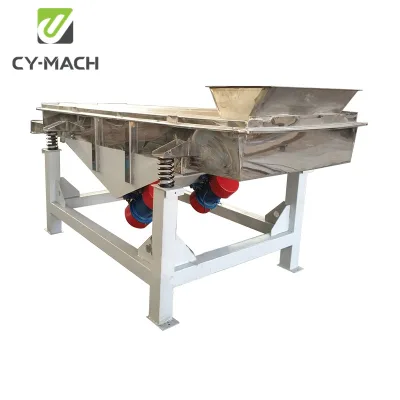


Comprehensive Sourcing Guide
Matcha Powder Vibrating Sieve Sourcing Guide
Procuring a matcha powder vibrating sieve requires identifying equipment capable of handling fine, high-value powders without degradation. The observed market features models like the VS-100A and ZS series, which utilize electric drives and vibration principles to ensure consistent particle separation. Buyers must prioritize machines designed for lightweight fine shaker applications, as these units are specifically engineered to maintain the delicate texture and color integrity essential for premium culinary and beverage products.
Selection criteria should focus on the specific mechanical configuration, such as circular or vertical running tracks, which directly influence the shaking efficiency of the powder. The observed data indicates a shaking efficiency of 4-5 cycles per second, a critical parameter for preventing clumping and ensuring uniform mesh distribution. Sourcing decisions must align with the intended throughput, balancing the need for high-frequency screening against the physical constraints of the production line to avoid bottlenecks in the processing workflow.
Product Scope and Observed Listing Signals
The available product range spans from basic vibrating sieves to complex pusher-type machines, with model numbers like SY400-1800 indicating variable dimensions for different processing scales. Listings frequently specify the application for food processing, including flour, rice flour, starch, and beans, confirming the equipment's versatility across various dry ingredient sectors. Buyers should verify that the specific unit selected matches the particle size requirements of matcha, as the standard 100KG capacity or 515 standard may not suit all batch sizes.
Packaging variations observed include naked packages, plywood cases, and wooden packing, which significantly impact shipping costs and product protection during transit. The origin of these machines is predominantly Zhengzhou and Henan, China, suggesting a concentrated manufacturing hub that may offer competitive logistics but requires careful vetting of individual factory capabilities. Procurement teams must distinguish between generic vibrating screens and those explicitly optimized for fine powders to ensure the machinery meets the rigorous quality standards of the matcha industry.
Technical Specifications to Verify
Critical technical parameters include the voltage requirements, which are observed at 380V, and the amplitude settings ranging from 25 to 30, both of which dictate the machine's operational stability and screening intensity. The drive system is consistently electric, and the shaft configuration varies between single and double shaft designs, influencing the mechanical balance and the uniformity of the vibration pattern. Buyers must confirm that the transmission structure, often described as a vibrating screen or spiral flash shaker, aligns with the specific flow dynamics of their matcha production line.
The crushing style, noted as grinding and impact, suggests that some units may integrate secondary processing functions, though the primary role remains screening. Supporting devices such as coil springs or plate springs are essential for isolating vibration and protecting the foundation, with the specific choice depending on the machine's weight and the floor conditions of the facility. Verification of the appearance, whether vertical or circular, is necessary to ensure the equipment fits the spatial constraints of the existing factory layout and integrates seamlessly with upstream and downstream processing units.
Compliance and Safety Documentation
While specific certification statuses are not explicitly detailed in the provided listings, buyers must demand evidence of compliance with international electrical and mechanical safety standards for industrial equipment. The warranty period is typically listed as one year, with some suppliers offering lifetime after-sales service, which serves as a baseline for the manufacturer's confidence in their product durability. Procurement contracts should explicitly define the scope of these warranties, ensuring they cover critical components like the electric drive and vibration mechanisms against premature failure.
Safety documentation must include detailed manuals for operation and maintenance, particularly regarding the high-frequency vibration and electrical systems. The observed after-sales service options, such as online video support, indicate a reliance on remote troubleshooting, which necessitates that the buyer's technical team possesses the requisite skills to diagnose and resolve issues without immediate on-site intervention. Ensuring that the supplier provides comprehensive safety data sheets and operational guidelines is vital for maintaining a safe working environment and adhering to local occupational health regulations.
Cost Drivers and Commercial Terms
The observed price range is extensive, spanning from 5.6 to 80,000 USD, reflecting the vast differences in machine capacity, material quality, and technological complexity. This wide variance suggests that cost is heavily driven by the specific model configuration, such as the SY series dimensions or the pusher-type mechanism, rather than a standardized base price. Buyers should analyze the total cost of ownership, including energy consumption for the electric drive and the long-term maintenance costs associated with the specific spring and shaft configurations.
Minimum Order Quantities (MOQ) are observed at 1 unit, offering flexibility for small-scale operations or pilot testing, yet this does not necessarily guarantee favorable pricing for single-unit purchases. The packing method, ranging from naked to plywood cases, introduces variable logistics costs that can significantly affect the final landed price. Commercial terms must clearly delineate responsibilities for shipping, insurance, and customs clearance, especially given the heavy nature of industrial vibrating sieves and the specific export packaging requirements observed in the market.
Supplier Qualification and Quality Control
Supplier qualification should prioritize manufacturers with a proven track record in producing food-grade processing equipment, as evidenced by the specific applications listed for flour, rice, and beans. The origin in Henan, China, indicates a specialized industrial cluster, but buyers must verify the specific factory's quality control processes to ensure consistency across batches. The availability of customization options is a key indicator of a supplier's flexibility, allowing for tailored solutions that address unique matcha processing requirements that standard models may not fully satisfy.
Quality control protocols must include rigorous testing of the vibration amplitude and frequency to ensure they meet the specified 4-5 cycles per second performance. Buyers should request detailed inspection reports for the electric drive and structural components, such as the coil or plate springs, to verify that the machine will operate reliably under continuous load. Establishing a clear communication channel for technical support and spare parts availability is essential, particularly given the one-year warranty period and the potential for complex mechanical failures in high-frequency screening applications.
Long-Term Procurement Checks
Long-term procurement success depends on the supplier's ability to provide consistent after-sales support and spare parts availability over the lifespan of the equipment. The observed warranty of one year is a starting point, but buyers should negotiate extended service agreements to cover the critical first few years of operation when mechanical wear is most likely to occur. The promise of lifetime service, where mentioned, requires clear definition of what constitutes "lifetime" and the specific terms under which remote or on-site support will be provided.
Regular performance audits should be conducted to monitor the shaking efficiency and vibration amplitude, ensuring the machine continues to meet the 25-30 amplitude and 4-5 cycles per second specifications over time. Buyers must establish a maintenance schedule that accounts for the wear on the supporting devices and the electric drive, preventing unexpected downtime that could disrupt the matcha production schedule. Continuous engagement with the supplier for updates on model improvements or standard changes ensures that the procurement strategy remains aligned with evolving industry best practices and technological advancements.
FAQs
What models are available for matcha powder vibrating sieves?
Available models include VS-100A, VS-100A/200A, ZS, and SY series variants like SY400-1800. These units support circular or vertical configurations. Buyers can select based on specific mesh requirements and throughput needs for fine powder processing applications.
Can these sieves be customized for specific production lines?
Yes, customization is available for these vibrating sieves. Manufacturers offer tailored solutions to match specific operational parameters. This ensures the equipment integrates seamlessly into existing flour or starch processing workflows while maintaining high separation efficiency for fine materials.
What is the typical voltage requirement for these machines?
The typical voltage requirement is 380V. These electric drive machines are designed for industrial power standards. This ensures stable operation during continuous fine shaker tasks. Buyers should verify their facility power supply matches this specification before installation and commissioning.
What warranty and after-sales service are provided?
A one-year warranty is standard for these units. After-sales support includes lifetime service availability and online video assistance. This ensures buyers receive technical guidance throughout the equipment lifecycle. The manufacturer supports troubleshooting and maintenance queries to minimize operational downtime effectively.
How are these vibrating sieves packaged for shipping?
Packaging options include naked packing, plywood cases, wooden packing, and standard export packaging. The method depends on the specific model and size. This ensures safe transit for delicate components. Buyers should confirm the preferred packaging type with the supplier to protect the equipment during international freight.
Where are these vibrating sieves manufactured?
These machines are manufactured in Zhengzhou, Henan, China. This region is a known hub for industrial machinery production. Buyers sourcing from this location benefit from established supply chains. The origin indicates the manufacturing base for these specific vibrating sieve models and related equipment.